What is Batik
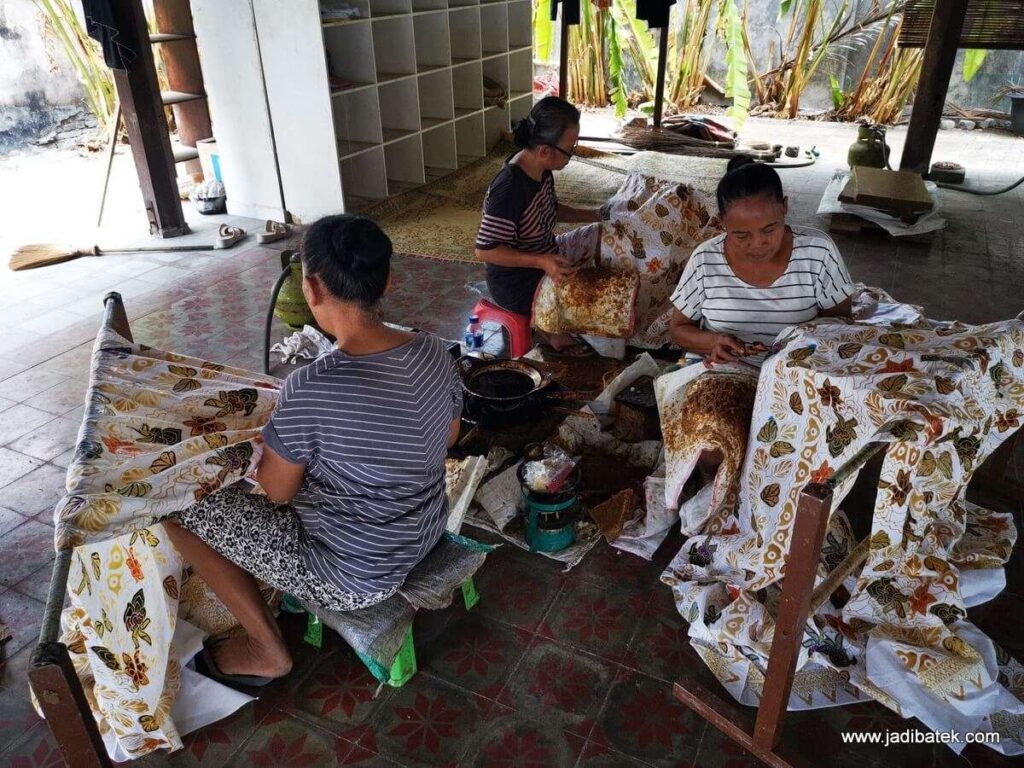
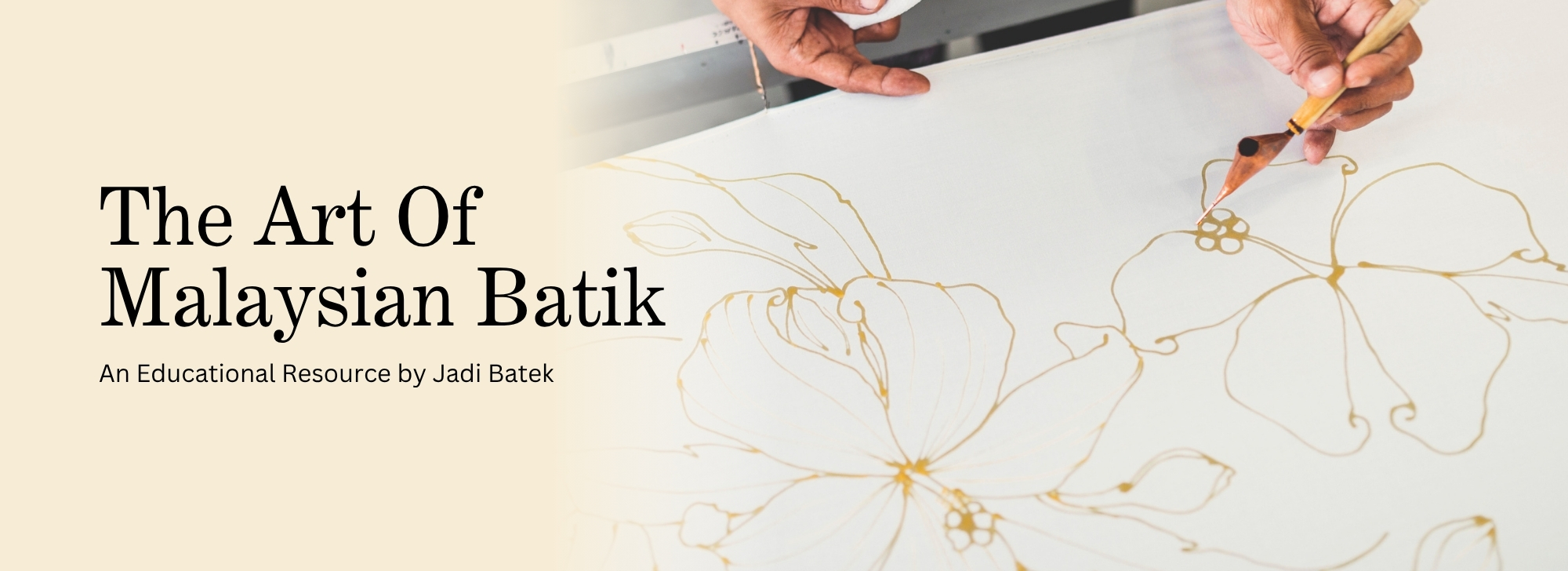
In simple term, Batik is an art to decorate cloth with wax as resist method. Derived from the Javanese words, amba (to write) and titik (dot), batik is an old form of art which loosely translated means to dot, while some have even translated it as wax writing or drawing with a broken line, batik is essentially a crafted fabric that needs to undergo the delicate and repeated process of waxing, dyeing and boiling. Wax is used as a mean of colour blocking in the colouring process. Every part of the fabric that remains untouched by a certain colour has to be covered with wax.
History
Although batik’s true origin remains shrouded in mystery, evidence of early batik has been found in the Middle East, Egypt, Peru, Japan, East Turkistan, Europe, as well as India and China as far back as 2000 years ago, and has reached its highest artistic expression in South East Asia, particularly in Indonesia and Malaysia. In Malaysia, where batik origins are obscure, it is believed that the states of Kelantan and Terengganu are recognised as the cradle where Malaysia batik grew.
Type of Batik
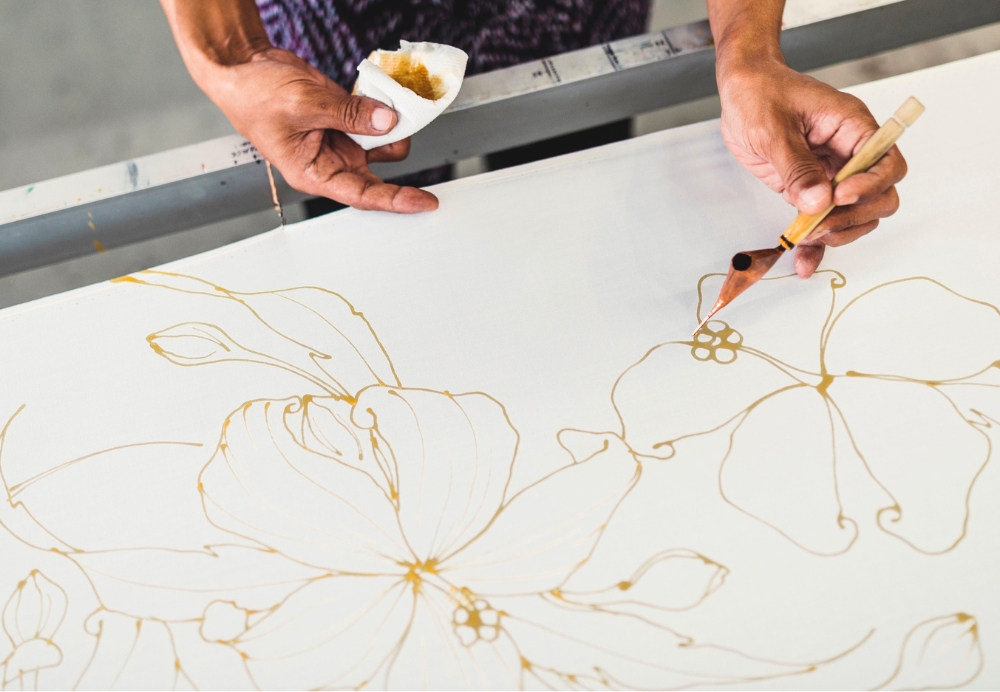
Hand-Drawn Batik
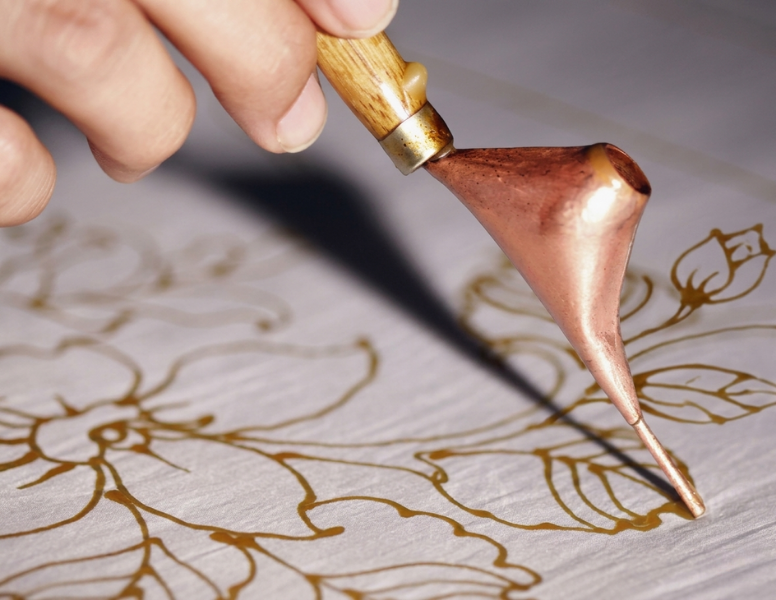
Artisanal Method: Hand-waxed via canting and brush-painted for multi-hued, shaded effects.
Design & Fabric: Floral and geometric motifs applied to materials like silk, cotton, and linen.
Sizing: Produced in 4m (women) or 2m (men) lengths, primarily for formal attire.
Range: Versatile enough for garments, accessories (scarves/pareos), and even framed art.
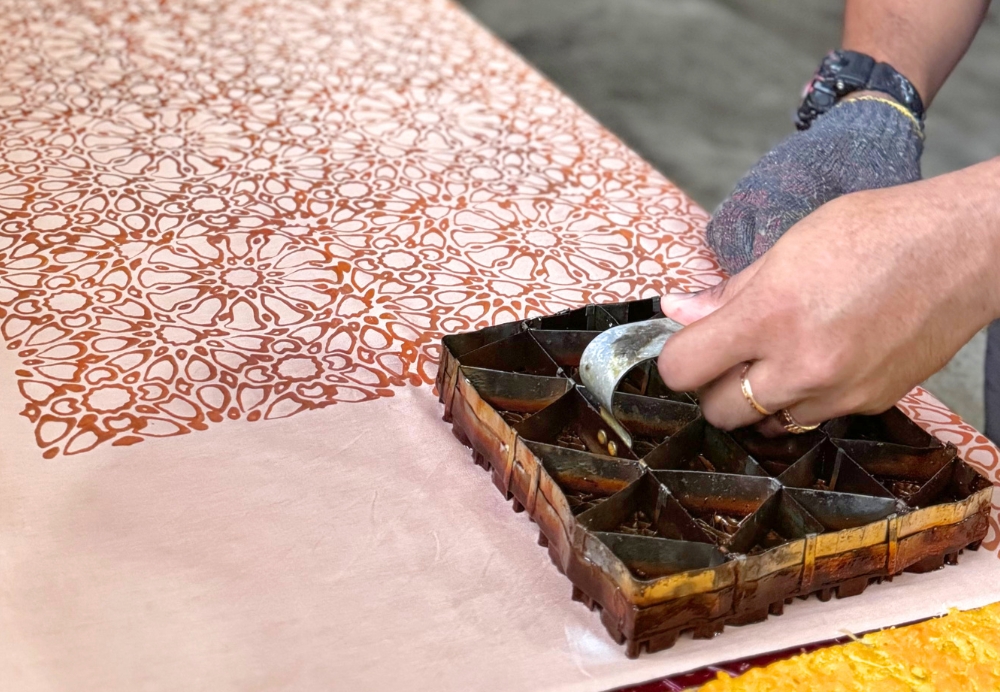
Block-Printed Batik
Stamping Technique: Copper or wooden blocks replace the canting to stamp wax patterns, followed by dip-dyeing.
Pattern & Color: Features repetitive designs; multi-colored effects require repeated cycles of waxing and dyeing.
Scale & Material: Typically 20m of cotton used for leisure wear, handicrafts, and furnishings.
Efficiency: Faster and more cost-effective than hand-drawn batik; ideal for mass production.
Characteristic of Malaysian Batik
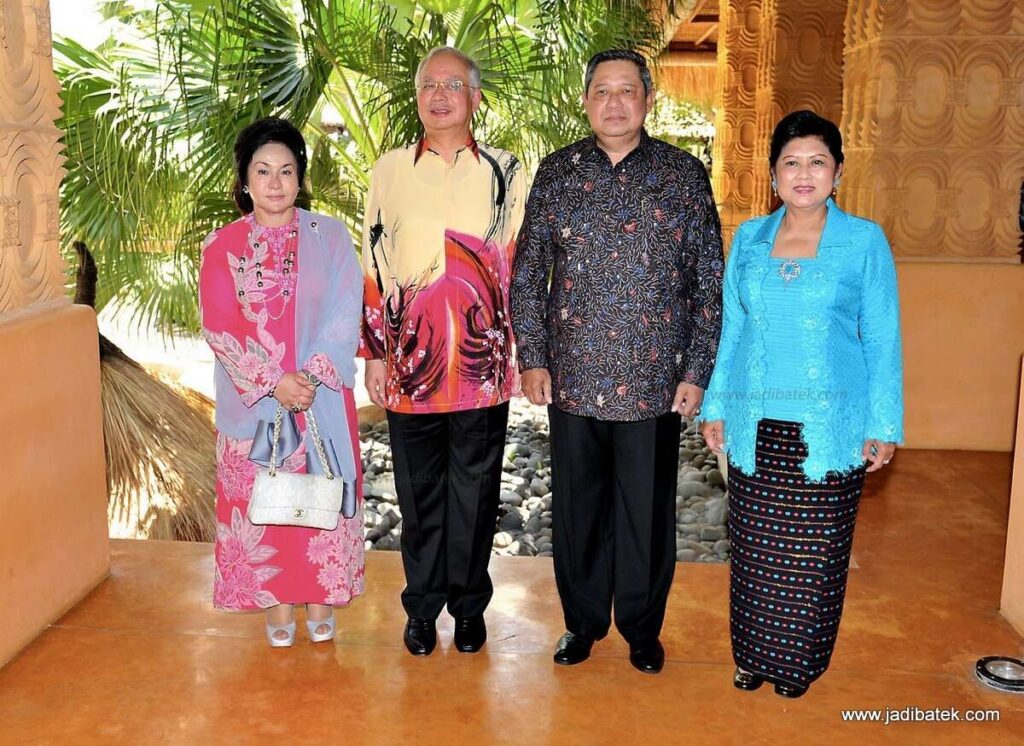
Although the history of batik in Malaysia can be traced back to Indonesia about 100 years ago, Malaysian batik has developed its own characteristic over the years. Some distinctive differences that can be seen include:
Drawing method: Malaysian batik artists stand when drawing the batik on a frame. Our Indonesian counterpart sit and draw the batik without any frame supports.
Malaysian batik has big, floral designs, while Indonesian ones are detailed and influenced by religion.
Colour: Malaysian batik colours are vibrant, Indonesian ones are dark and uses a lot of brown.
Identifying Quality Batik
Colour Scheme
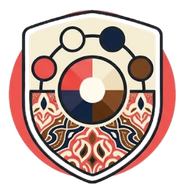
The traditional way of making batik uses malam (hot liquid wax), which was introduced by the Gujarati traders who came to Java in the 6th century. In addition, it uses natural dye derived from leaves and flowers, which produces earthy-tones. The deep-brown colour is called ‘sogan’ in local language, which is why the traditional batik is sometimes called batik sogan. In contrast, commercially-made printed batik uses chemical dyes which results in brighter and more vibrant colours. The colour variation is also richer.
Reverse side
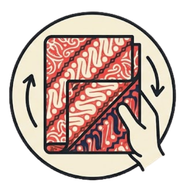
The easiest way to identify a handmade batik is to look at the reverse side of the fabric. The reverse side of a printed batik is visibly faded as only one side of the fabric is printed on. On the other hand, the colour of a hand drawn batik tulis is consistent on both sides as the fabric is immersed into a vat of dye.
Unique appearance
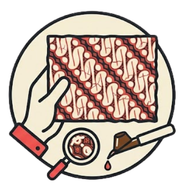
Every stroke on a batik tulis is hand-drawn using a canting – this gives each batik produced a unique appearance. Since batik tulis is hand-drawn, one may spot stains and anomalies; the strokes may not be as precise as the ones on a printed batik, but, this beautiful mess is what makes it even more valuable.